- English
- Español
- Português
- русский
- Français
- 日本語
- Deutsch
- tiếng Việt
- Italiano
- Nederlands
- ภาษาไทย
- Polski
- 한국어
- Svenska
- magyar
- Malay
- বাংলা ভাষার
- Dansk
- Suomi
- हिन्दी
- Pilipino
- Türkçe
- Gaeilge
- العربية
- Indonesia
- Norsk
- تمل
- český
- ελληνικά
- український
- Javanese
- فارسی
- தமிழ்
- తెలుగు
- नेपाली
- Burmese
- български
- ລາວ
- Latine
- Қазақша
- Euskal
- Azərbaycan
- Slovenský jazyk
- Македонски
- Lietuvos
- Eesti Keel
- Română
- Slovenski
- मराठी
- Srpski језик

Can a Smart Meter Solve Modern Grid Inefficiencies Permanently?
The global electrical infrastructure faces unprecedented stress from distributed generation, electric vehicle proliferation, and fluctuating industrial loads. Conventional measurement devices, designed for unidirectional flow and monthly readings, no longer suffice. In this context, the Smart Meter emerges as a transformative component. Unlike passive registers, this device operates as an intelligent gateway, capturing granular data, enabling bidirectional communication, and supporting dynamic grid management. For utilities and industrial facilities, the adoption of such technology marks a shift from reactive billing to proactive energy optimization.
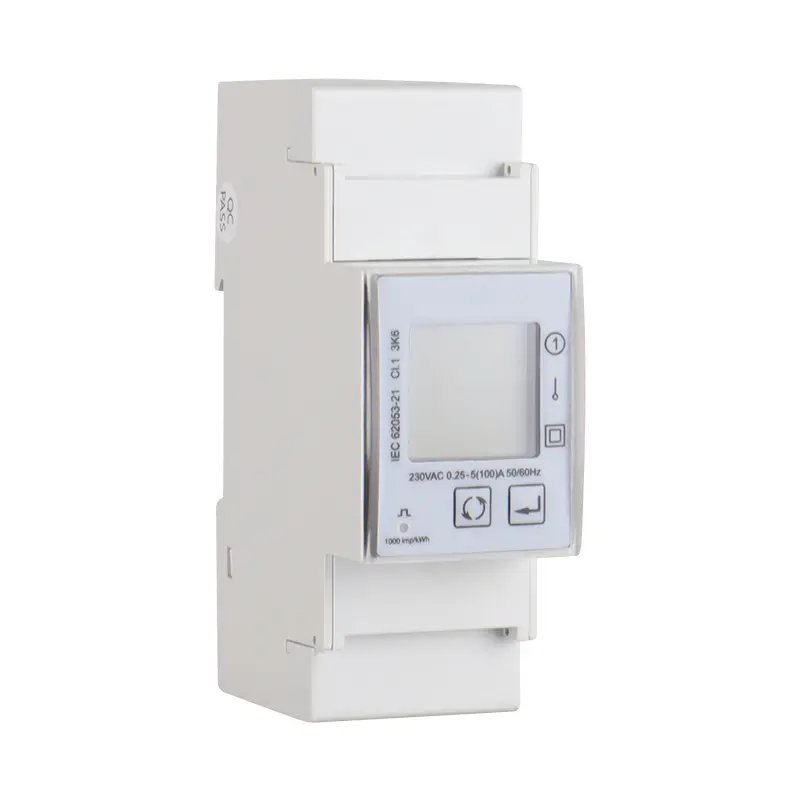
Core Functional Layers of Intelligent Measurement
Modern measurement endpoints integrate several advanced layers:
- Sensing layer: High-precision current and voltage transducers with wide dynamic range.
- Communication layer: Hybrid modules supporting RF mesh, PLC, and cellular backhaul.
- Computing layer: Edge processors running harmonic analysis, event detection, and data compression.
- Security layer: Hardware cryptographic engines for encrypted telemetry and secure firmware updates.
Key Technical Specifications to Evaluate
When selecting such Can a Smart Meter Solve Modern Grid Inefficiencies Permanently? for heavy industrial use, engineers must examine:
- Sampling rate: Higher rates capture fast transients but demand more storage. Industrial environments benefit from variable sampling triggered by thresholds.
- Communication protocols: Support for DLMS/COSEM, IEC 61850, or Modbus TCP ensures compatibility with existing SCADA.
- Environmental endurance: Operation across wide temperature ranges and resistance to electromagnetic interference from variable frequency drives.
- Non-volatile memory: Retention of configurations and event logs across power outages, eliminating re-commissioning efforts.
Operational Advantages for Industrial Motor Control Systems
Motor control centers (MCCs), variable frequency drives (VFDs), and soft starters are sensitive to power quality. A measurement device placed at the feeder level provides continuous monitoring of parameters critical to motor health:
- Voltage imbalance: Even small imbalances cause excessive current in one phase, leading to winding insulation breakdown.
- Harmonic distortion: VFDs inject harmonics that increase eddy current losses; real-time harmonic recording enables filter sizing.
- Power factor: Low power factor triggers utility penalties and reduces system capacity; automated alerts allow capacitor bank switching.
- Inrush current events: Capturing motor start-up profiles helps engineers validate coordination with overload relays and circuit breakers.
Case Insight: Food Processing Facility
A large bakery with multiple conveyors, mixers, and refrigeration units installed networkable measurement devices across twelve distribution panels. Within three months, the data revealed a recurring voltage sag caused by an undersized transformer feeding the packaging line. Corrective action—transformer upsizing—eliminated packaging machine resets that had caused thousands of product rejects annually. In another instance, harmonic analysis traced excessive neutral current to non-linear LED drivers, allowing remediation through passive filtering. These outcomes demonstrate why industrial operators now regard such measurement hardware as essential diagnostic tools rather than mere billing instruments.
Comparative Analysis: Conventional vs. Intelligent Measurement
| Parameter | Traditional Meter | Intelligent Measurement Device |
|---|---|---|
| Data Recording Frequency | Monthly cumulative | Sub-second to hourly intervals |
| Remote Access | Manual reading only | Wireless or powerline carrier with cloud dashboard |
| Tamper & Anomaly Detection | Physical seal only | Magnetic, tilt, cover-open, voltage-loss logs plus harmonic alerts |
| Load Profiling Capability | Flat consumption assumption | Detailed waveform with harmonic distortion up to multiple orders |
| Integration with Automation | None | Open APIs for SCADA, BMS, and demand response systems |
Implementation Challenges in Existing Electrical Rooms
Despite clear benefits, retrofitting legacy infrastructure with modern measurement units presents real-world obstacles:
- Space constraints: Existing panelboards often lack room for current transformers or auxiliary power supplies. Custom mounting or external enclosures may be required.
- Wiring complexity: Running communication cables in congested conduits demands careful planning to avoid noise coupling from power conductors.
- Safety protocols: Installing or replacing devices inside live switchgear requires arc-flash hazard analysis and specialized training for technicians.
- Protocol translation: Legacy building automation systems may not natively support modern metering protocols, necessitating gateways that add cost and potential failure points.
Regulatory Drivers for Adoption
Across major economies, regulations increasingly mandate interval data recording for commercial and industrial facilities above specified demand thresholds. For instance, certain European directives require sub-hourly granularity for energy audits and carbon reporting. Similarly, North American grid operators offer incentive programs for facilities that provide real-time load data through certified measurement devices. These regulations, coupled with rising energy costs, create a compelling financial case for upgrading. Non-compliance may result in penalties or exclusion from demand response markets, further accelerating replacement of conventional meters.
Future Integration: Edge Analytics and Digital Twins
The next evolution embeds lightweight machine learning directly inside the measurement endpoint. On-device inference can identify patterns such as capacitor bank degradation, arcing faults, or insulation resistance loss without sending raw data to the cloud. This edge architecture reduces communication bandwidth, improves response time, and enhances data privacy. Some prototypes already demonstrate anomaly detection accuracy exceeding ninety-five percent using compact firmware. As silicon costs decline, such smart capabilities will become standard, enabling predictive maintenance at the sensor level rather than relying on centralized analytics platforms.
Synergy with Digital Twin Simulations
Digital twins of industrial facilities require live data streams to remain accurate. The continuous feed from high-resolution measurement units serves as ground truth, calibrating virtual models of power distribution and motor behavior. Engineers can then run “what-if” scenarios—such as adding a new robotic welding cell or shifting production schedules—and instantly observe effects on transformer loading and peak demand. Without this live validation, digital twins risk becoming static diagrams with limited practical value. Therefore, the integration of advanced measurement endpoints with simulation software defines best-in-class energy management for large campuses and multi-building sites.
Selecting Durable Measurement Solutions for Harsh Environments
Industrial applications demand robust hardware. Key selection criteria include:
- Ingress protection: Minimum IP54 for dusty environments; IP65 or higher for wash-down areas in food processing.
- Wide operating temperature: From sub-zero cold storage to high-temperature foundries, typically -25°C to +70°C.
- EMC immunity: Compliance with IEC 61000-4 levels for fast transients, surges, and radiated interference.
- Redundant power supply: Auxiliary power inputs that tolerate wide voltage swings (e.g., 100-480V AC/DC) with built-in surge arrestors.
- Certifications: CE, UL, ETL, or other local marks ensure safety and performance adherence.
Long-Term Reliability: What a Smart Meter Must Deliver
For industrial clients, the Smart Meter is not a disposable component but a long-term infrastructure asset. Reliability hinges on several design choices: switched-mode power supplies with wide input ranges, non-volatile memory that retains data for decades, and self-diagnostic routines that alert technicians to internal sensor drift. Additionally, modular construction allows field replacement of communication modules without removing the entire unit, minimizing downtime. These characteristics separate entry-level devices from those suitable for mission-critical applications such as data centers, hospitals, and continuous-process manufacturing lines.
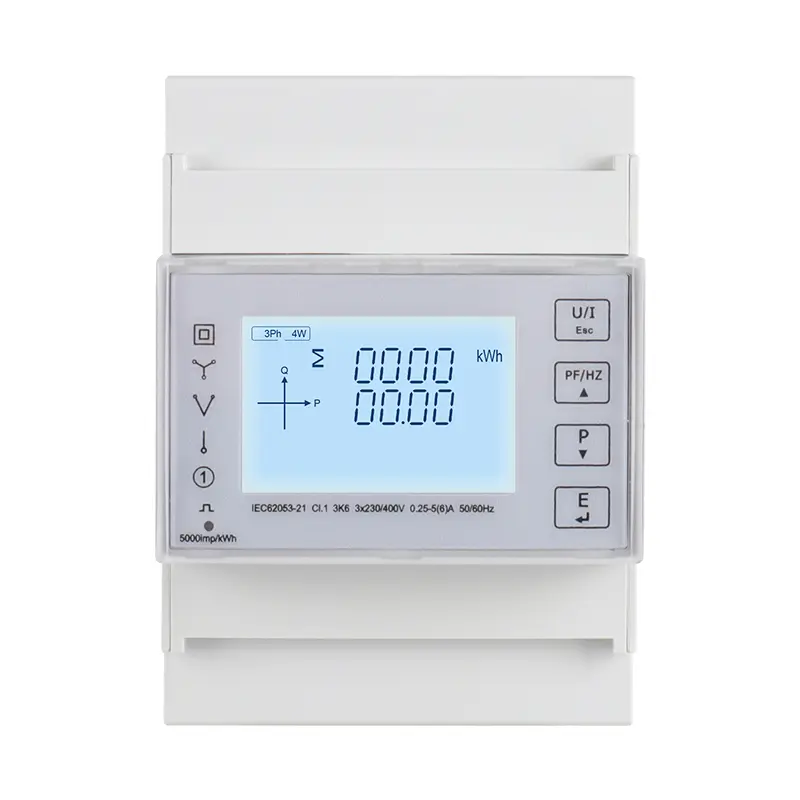
Wenzhou Xinkong Import & Export Co., Ltd.: Expertise in Electrical System Integration
Within the competitive landscape of electrical product manufacturing, Wenzhou Xinkong Import & Export Co., Ltd. distinguishes itself as an innovative enterprise integrating scientific research, production, and sales. The company is a professional manufacturer of electrical products, recognized as a state-level hi-tech enterprise. Its headquarters in Wenzhou, Zhejiang Province, oversees the development of electrical motor control products, including meters, circuit breakers, frequency converters, and inverters—all engineered for ultra-high reliability and structural durability to meet diverse operational demands. The firm’s first-class R&D strength and professional technical team enable customized solutions and comprehensive technical assistance, aligning with the corporate slogan: "Excellent Quality, Customer Satisfaction, and Putting Customers' Interests First."
For global electrical infrastructure projects requiring precision, durability, and seamless integration, the role of a reliable measurement platform cannot be overstated. Whether upgrading legacy switchgear, designing a new motor control center, or implementing a facility-wide energy monitoring system, the selection of an appropriate Smart Meter—combined with robust protection devices—directly impacts operational efficiency and long-term cost. Wenzhou Xinkong Import & Export Co., Ltd. provides such integrated electrical system products, backed by manufacturing excellence and technical support. Facilities seeking to modernize their measurement and control architecture will find a partner committed to quality and customer-focused innovation, ensuring that each deployed component contributes to a safer, more efficient, and future-ready electrical environment.