- English
- Español
- Português
- русский
- Français
- 日本語
- Deutsch
- tiếng Việt
- Italiano
- Nederlands
- ภาษาไทย
- Polski
- 한국어
- Svenska
- magyar
- Malay
- বাংলা ভাষার
- Dansk
- Suomi
- हिन्दी
- Pilipino
- Türkçe
- Gaeilge
- العربية
- Indonesia
- Norsk
- تمل
- český
- ελληνικά
- український
- Javanese
- فارسی
- தமிழ்
- తెలుగు
- नेपाली
- Burmese
- български
- ລາວ
- Latine
- Қазақша
- Euskal
- Azərbaycan
- Slovenský jazyk
- Македонски
- Lietuvos
- Eesti Keel
- Română
- Slovenski
- मराठी
- Srpski језик
How Can a Smart Meter Help You Control Costs and Prevent Surprises?
Article Abstract
A smart meter is more than a “digital counter.” It’s a practical tool that helps utilities, building owners, and households understand usage patterns, spot waste early, and reduce disputes caused by estimated bills or missed readings. Whether you manage a residential community, run a factory, or simply want clearer monthly bills, smart metering can deliver measurable value—if you choose the right device, communications method, and deployment plan.
This guide explains how smart meters work, which pain points they solve, and what to check before buying or upgrading. You’ll also get a step-by-step selection checklist, a comparison table, and a frequently asked questions section to help you move from “interested” to “implemented” with confidence. Wenzhou Xinkong Imp&exp Co.,Ltd. supports customers looking for reliable metering options and practical deployment guidance.
Table of Contents
- Outline
- What Is a Smart Meter?
- Customer Pain Points Smart Meters Solve
- Key Benefits You Can Expect
- Smart Meter vs. Traditional Meter
- How to Choose the Right Smart Meter
- Deployment Tips That Prevent Costly Mistakes
- How to Think About ROI
- FAQ
- Next Steps
Outline
- Define smart meters and how they collect and transmit data
- Identify the most common billing, leakage, and operational issues customers face
- Show real-world benefits for homes, property managers, and industrial users
- Compare smart and traditional meters in a clear table
- Provide a practical buying checklist (accuracy, comms, integration, protection)
- Share deployment best practices (installation, data quality, security, maintenance)
- Answer common questions and suggest a clear next step
What Is a Smart Meter?
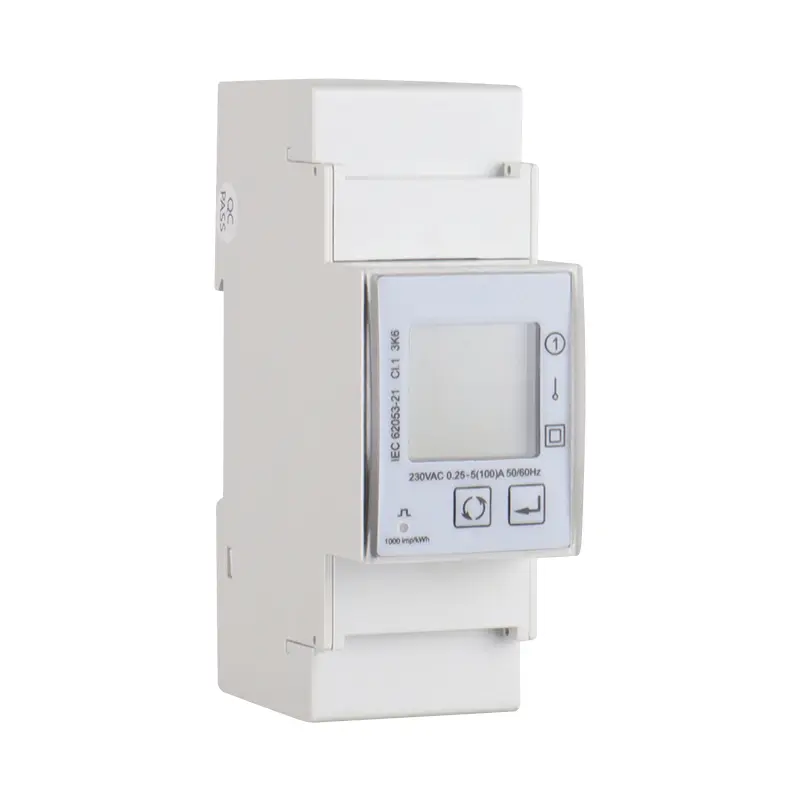
A smart meter is a measurement device (for electricity, water, gas, or heat) that records consumption in intervals and shares that data with a local system or a remote platform. Unlike a traditional meter that needs manual readings, a smart meter can send usage information automatically—reducing missed reads, estimated bills, and the time spent on on-site inspections.
Depending on the application, a smart meter may include:
- High-accuracy measurement to ensure billing fairness and compliance.
- Data logging to capture hourly/daily usage patterns.
- Communication modules (wired or wireless) that transmit data.
- Tamper detection to reduce fraud and unauthorized access.
- Remote monitoring features that support alerts and analytics.
Smart meters are widely used in utility-scale networks (advanced metering infrastructure) and increasingly in buildings and campuses where facility teams need real-time visibility to manage costs.
Customer Pain Points Smart Meters Solve
Most customers don’t buy a smart meter because it’s “cool.” They buy it because something hurts—time, money, trust, or operational stability. Here are the pain points smart meters are built to address:
- Estimated billing and disputes: Manual reads can be delayed or missed, leading to estimates and customer complaints.
- Leakage and hidden waste: Small leaks in water systems can run for weeks before someone notices, quietly inflating bills.
- No visibility into patterns: Without interval data, it’s hard to know whether usage spikes are caused by equipment, behavior, or faults.
- High labor costs: Sending staff to read meters across a community or industrial site is time-consuming and expensive.
- Slow response to anomalies: If abnormal consumption is only discovered at the end of the billing cycle, the damage is already done.
- Revenue loss from tampering: Traditional systems may not flag irregularities quickly enough to prevent ongoing losses.
In practical terms, smart metering turns “monthly surprises” into “early warnings,” which is usually where the real savings come from.
Key Benefits You Can Expect
A well-planned smart meter rollout can deliver value across three levels: end users, operators, and financial outcomes.
- For households and tenants: clearer bills, fewer estimates, faster resolution of disputes, and better awareness of daily usage.
- For property managers: fewer site visits, smoother tenant communication, easier sub-metering, and quicker detection of leaks or abnormal usage.
- For industrial and commercial sites: better load/usage profiling, improved accountability across departments, and stronger support for cost control programs.
If your operation uses time-based tariffs or has peak-load penalties, smart metering can also help you understand when consumption happens—not just how much—so you can shift usage where practical.
Smart Meter vs. Traditional Meter
| Feature | Traditional Meter | Smart Meter |
|---|---|---|
| Reading method | Manual / on-site | Automatic / remote |
| Billing accuracy | Can involve estimates if reads are missed | More consistent, fewer estimates |
| Usage insights | Usually total-only | Interval data and trends |
| Leak / anomaly detection | Often delayed until the next bill | Earlier alerts are possible |
| Operational workload | Higher labor for readings and checks | Lower routine labor, more automation |
| Tamper awareness | Limited or slow | Can include tamper flags and event logs |
| Integration potential | Minimal | Can connect to dashboards, billing, and facility systems |
How to Choose the Right Smart Meter
Choosing a smart meter is not just picking a brand—it's matching the meter to your environment, data goals, and maintenance reality. Use this checklist to avoid the most common mismatches:
- Meter type and application: Are you measuring electricity, water, gas, or heat? Is it main metering or sub-metering?
- Accuracy class: For billing or compliance use, confirm the accuracy level and relevant certifications required in your market.
- Flow/load range: Especially for water systems, ensure the meter performs well at both low flow and peak demand.
-
Communication method: Choose based on site conditions:
- Wired: stable in dense buildings; may require more installation work.
- Wireless: flexible for retrofits; confirm signal reliability and coverage.
- Cellular / NB-IoT / LoRa-style networks: useful for distributed sites; consider subscription cost and local network availability.
- Power and battery life: For battery-powered meters, ask for realistic battery expectations under your reading interval and transmission frequency.
- Environmental protection: Check enclosure rating (dust/water), temperature range, and corrosion resistance if installed outdoors or in harsh rooms.
- Data compatibility: Confirm how data is exported and whether it fits your billing or monitoring system (file formats, APIs, or supported platforms).
- Tamper and security features: Look for event logs, sealing, and basic data security support to reduce fraud risk.
- Serviceability: Make sure calibration, maintenance, and replacement procedures are realistic for your team.
If you’re sourcing smart metering products for a project, Wenzhou Xinkong Imp&exp Co.,Ltd. can help you map these requirements to suitable product options and deployment approaches—especially when you’re balancing performance, durability, and budget.
Deployment Tips That Prevent Costly Mistakes
Many smart metering projects fail not because the meter is “bad,” but because deployment planning was too optimistic. Here are practical tips that reduce risk:
- Start with a pilot zone: Deploy a small group first to validate signal coverage, reading intervals, and data quality.
- Define your “action rules” early: Decide what happens when consumption spikes: who gets notified, and what’s the response time?
- Check installation conditions: Poor pipe alignment, air pockets, or electrical noise can reduce accuracy and create false anomalies.
- Validate data end-to-end: Confirm that meter readings match what your platform shows, and that reports align with billing cycles.
- Plan for maintenance: Battery replacement schedules, seal checks, firmware updates (if applicable), and periodic verification should be documented.
- Protect privacy and access: Limit user permissions, secure dashboards, and keep logs of changes and data exports.
Think of deployment as a system: meter + communications + software + people. The more clearly those pieces connect, the more value you’ll get.
How to Think About ROI
Return on investment usually comes from a mix of hard savings and “saved headaches.” A simple way to estimate value is to look at:
- Reduced labor: fewer manual reads and fewer site visits for disputes.
- Leakage reduction: earlier detection means fewer weeks of unnoticed waste.
- Lower dispute and correction costs: accurate data resolves conflicts faster.
- Operational stability: fewer emergencies caused by late discovery of anomalies.
If you manage multiple meters (a building portfolio, campus, or industrial park), even small per-meter improvements can add up quickly. The key is to measure baseline performance first, then compare after rollout using the same periods and conditions.
FAQ
1) Will a smart meter lower my bill automatically?
Not automatically—but it enables the behaviors and decisions that lower bills. The meter provides visibility and early warnings. Savings typically come from fixing leaks, reducing waste, and managing usage during costly periods.
2) Is installation complicated?
It depends on the site and meter type. Retrofits can be straightforward, but communications planning (signal coverage, gateways, platform setup) is where many projects need extra care. A pilot installation is the safest approach.
3) How often should a smart meter transmit data?
That depends on your goals. More frequent data provides faster detection but can increase power use and network load. Many projects choose a balanced interval that supports timely alerts without draining batteries too quickly.
4) Are smart meters secure?
Security is a combination of device features and system management. Choose meters with tamper awareness and sensible data handling options, then secure your platform access with strong permissions and monitoring practices.
5) Can smart meters work in apartments or tenant buildings?
Yes. Smart sub-metering is common in multi-unit properties because it reduces manual reading and helps managers handle billing fairly. The key is selecting communication methods that work well in dense building structures.
6) What should I prepare before purchasing?
Make a quick requirements list: meter type, accuracy need, installation environment, desired reading interval, communication constraints, and integration targets (billing system or monitoring dashboard). This prevents buying the “right meter for someone else’s project.”
Next Steps
If you want fewer billing disputes, faster leak detection, and clearer consumption visibility, a smart meter is a practical upgrade—when it’s chosen and deployed with the full system in mind.
Tell us your application (water/electric/gas), installation environment, and preferred communication method, and we’ll help you narrow down the best-fit options. For product sourcing and project support, reach out to Wenzhou Xinkong Imp&exp Co.,Ltd.—and contact us to get a tailored recommendation for your site.